
Long after an HVAC system is installed in a school, someone still has to maintain it. Filters need to be changed. Coils need to be cleaned. Technicians may need to troubleshoot the equipment quickly to ensure students are put in the best position to succeed.
Serviceability should be part of every school's HVAC decision. School administrators don’t need to become HVAC experts to choose the right system, but they do ask the right questions and involve the people who work on the building every day.
Below we’ll break down some core serviceability questions schools should ask when comparing HVAC manufacturers and systems:
- How easy is it to change filters?
- How easy is it to access HVAC units?
- Are replacement parts readily available?
- What happens if equipment goes down?
- Can in-house maintenance or local technicians work on equipment?
- What support does the manufacturer provide after installation?
How Easy Is It to Change Filters?
Filter changes are one of the most routine maintenance tasks for school HVAC systems. Because they happen regularly, schools should ask how easy filters are to reach and replace.
Key questions to ask include:
- Can maintenance staff quickly and easily access the filters?
- Are the units compatible with common filters sizes?
- Will replacement filters be easy to source?
- Does the system require a custom filter that may be more expensive or harder to get?
The answers to these questions directly affect day-to-day maintenance. If filters are difficult to access, routine work can become more time-consuming. If filters are custom sizes, schools may face more challenges when sourcing replacements. What once seemed like a simple change can become more complicated and costly than originally expected.
How Bard Address Filter Access
Bard Manufacturing designs school HVAC systems with serviceability in mind. Our units are designed with access panels and modular components that make filter changes straightforward for in-house janitorial and maintenance staff.
Bard equipment also accommodates a wide range of common filter sizes to provide a balance between convenience and high-quality filtration. Units including the I-TEC Air Conditioner can use up to MERV13 air filters to help prevent the spread of virus-sized particles and improve indoor air quality for students and staff.
[button – Read More About Filter Types and Service Maintenance]
How Easy is it to Access HVAC Units?
The less accessible the unit, the more inconvenient it is to complete anything from routine filter changes to unplanned troubleshooting. School administrators should always ask how easy it is to reach any unit to uncover any logistical issues that can arise in the future.
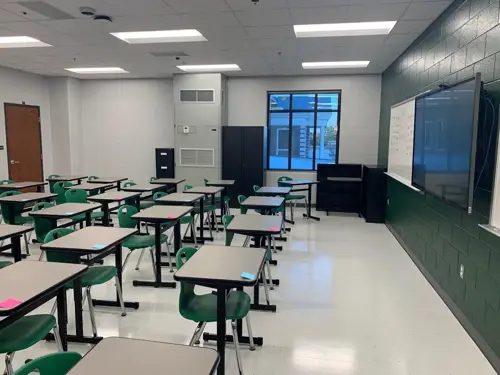
Useful questions include:
- Does accessing the unit disrupt the classroom?
- Does the technician need to get on the roof?
- Is a ladder required?
- Can maintenance staff reach the equipment without need for safety equipment or other additional resources?
These questions matter because the location and layout of HVAC equipment can affect how quickly maintenance teams can respond when something needs attention. More barriers to access result in more complications that lead to extra steps that take more time and planning.
How Bard Addresses HVAC Unit Access
Bard takes an individualized approach to school HVAC that makes access more practical for maintenance teams. An interior solution like the I-TEC Air Conditioner with Two-Stage Step Capacity Dehumidification allow staff to access units from directly in the classroom. Meanwhile, an exterior unit like the Bard Comfort Flex with Inverter Technology Dehumidification are located on the exterior wall. Either way, this approach means staff have simpler access options instead of having to go to the rooftop or a crowded equipment room.
Are Replacement Parts Readily Available?
Part availability should be part of the HVAC conversation before a school invests in new equipment. Even a serviceable system becomes harder to maintain if replacement parts are difficult to order or access.
Key questions include:
- Where do replacement parts come from?
- Is there a local distribution resource?
- Are parts available through a nearby distributor?
- How does the manufacturer support parts access after installation?
How Bard Addresses Part Availability
Bard’s extensive distribution network allows schools to get the right parts they need for dependable HVAC solutions. Our distributors maintain local inventory of replacement parts that allow for shorter lead times and quicker delivery. That support model means that schools have confidence that they can get the parts they need in order to stay ahead of maintenance and limit downtime.
What Happens if Equipment Goes Down?
HVAC downtime can be a massive disruption for a school. A serviceability conversation should include what happens if a unit goes down and how much of the building is affected.
Important questions include:
- Does one equipment issue affect one classroom or a larger area?
- How quickly can maintenance staff identify and address which space is affected?
- Can the school limit disruption while the issue is addressed?
How Bard Address Classroom-Level Impact
Bard’s decentralized approach to HVAC limits potential disruptions caused by equipment failures. If a unit happens to go down, the issue will only impact that specific room.
For students, administrators, and staff, that distinction matters. Bard’s individualized units limit the scope of downtime while maintenance staff focus on the specific unit and space that need attention, unlike a traditional single system that would pose problems for an entire wing or larger area of the school.
Can In-House Maintenance or Local Technicians Work on Equipment?
When discussing serviceability, schools need to ask about both the equipment itself and who can work on that equipment. Some HVAC equipment can complicate maintenance work, as more traditional systems may require specialized third-party contractors to perform basic maintenance tasks. If you want to rely on in-house and local HVAC technicians, you’ll need to ask about that upfront.
Key questions include:
- Can school maintenance staff work on the equipment?
- Can local HVAC technicians troubleshoot and repair it?
- Does the system require a specialist with narrow product knowledge?
- How much training and support is available for the people who will service the equipment?
How Bard Supports In-House Technicians
Bard units are built with both installation speed and long-term serviceability in mind without sacrificing performance. Plug and play configurations streamline installation and simplify ongoing maintenance, eliminating the need for invasive above-ceiling work or complex servicing that may require third-party assistance.
What Support Does the Manufacturer Provide After Installation
The manufacturer relationship should not end when the unit is installed. Schools should ask what support is available after the investment is made, both in terms of available resources and training options. These discussions can help schools evaluate the long-term partnership behind the HVAC system.
Questions to ask include:
- Does the manufacturer train end users?
- Is there access to localized support?
- Is technical service accessible when issues arise?
- Is there a support structure behind the local distributor?
How Bard Supports Schools After Installation
Bard provides two layers of support for troubleshooting and service. Localized sales representatives are backed by Bard’s own technical and customer service teams that support you before, during, and after installation. Factory training is also available online, on site, or at a Bard facility to give in-house staff flexible resources for self-paced learning.
Serviceability Should Be Part of Every School HVAC Conversation
Choosing a school HVAC system is not only about how the equipment performs on day one. The ideal system for your school should also support your future needs, providing reliable, efficient, and maintainable climate control for years to come.
Bard Manufacturing designs school HVAC systems that address your serviceability questions. We provide schools across the country with independent, accessible comfort systems backed by local distribution, trained partners, and responsive technical support.
Ready to evaluate HVAC systems that support your classrooms and your maintenance team? Breathe easy. You’ve got Bard.


